Article
The evolution of safety solutions at heights: why adaptability is crucial in modern work environments.
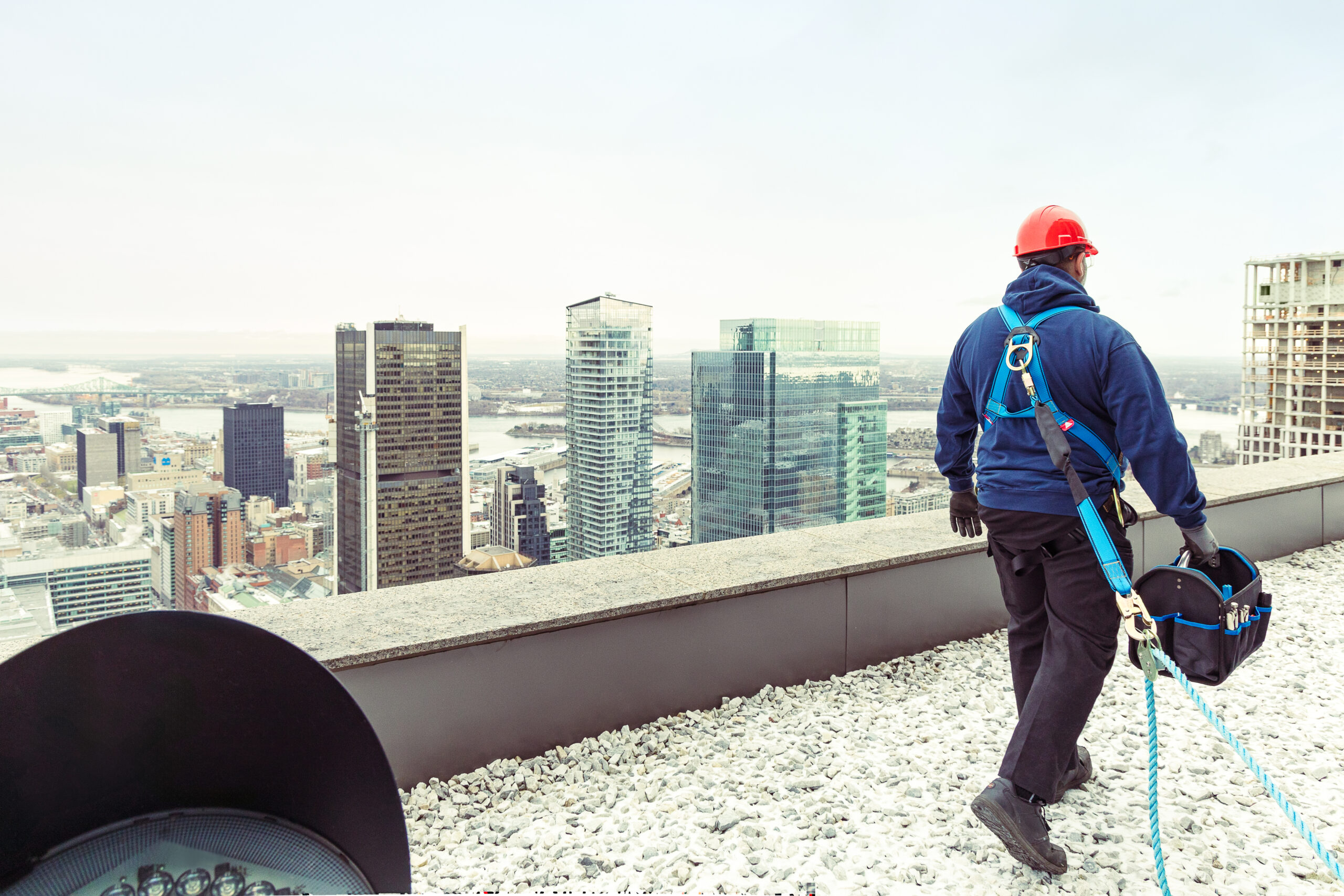
The safety of workers at height is a major issue in many sectors, notably construction and building maintenance. As security requirements continue to evolve and work environments become more diverse and complex, protection solutions must adapt. Mobile anchoring has established itself as a key response to these modern challenges, offering flexibility that goes far beyond traditional anchoring systems.
The growing importance of adaptability in modern environments
Today’s work environments are no longer static. Companies often face rapid changes: new projects, temporary work sites, large-scale installations or constantly evolving construction sites. This dynamism requires safety solutions at heights capable of adapting to these constantly changing contexts.
Traditionally, fixed anchorage systems were the norm. Although they offer reliable protection, they lack flexibility. They are often expensive to install and cannot be moved from one site to another, which makes them unsuitable for occasional or varied projects. Conversely, mobile anchors have been designed to meet this growing need for adaptability. Easy to install, mobile and reusable on different types of construction sites and buildings, they offer a flexible solution for companies that constantly have to juggle between different sites and projects. In addition, their portability simplifies maintenance operations by allowing quick and efficient interventions, thus ensuring the continued compliance and safety of equipment.
The advantages of mobile anchors in modern environments
Adaptability is at the heart of the advantages of mobile anchors. Here is why they are increasingly becoming a strategic choice for modern businesses:
- Installation flexibility: Unlike fixed anchors, which often require heavy structural work, mobile anchors can be installed quickly and without altering surfaces. This simplicity allows companies and building managers to deploy height security solutions without disrupting their operations.
- Versatility: Mobile anchors are designed to adapt to a wide variety of environments, whether on roofs, building facades or temporary structures. This versatility allows companies to use them on different sites and buildings in various configurations.
- Cost reduction: Installation and maintenance of fixed anchorage systems can quickly become costly, especially when projects change frequently. Mobile anchors, on the other hand, represent a long-term cost-effective solution, as they can be reused across different sites, reducing security-related expenses.
- Compliance with safety standards: The mobile anchors, although they are designed to be flexible, comply with the strictest safety standards. This means that they offer reliable protection while allowing businesses to remain compliant with local and international regulations.
Safety as a lever of efficiency
The adaptability of mobile anchors is not limited to safety. By offering a flexible and quick to install solution, they contribute to improving the operational efficiency of companies. Workers can access risk areas more quickly, which reduces site downtime and speeds up project delivery times. Thus, mobile anchors are not only a security solution, but also a strategic tool to increase the productivity of teams in the field.
The future of safety systems at heights
The evolution of modern work environments requires companies to rethink their security strategies. Mobile anchors, with their ability to adapt to various contexts, embody this new era of protection at height. As construction sites become more dynamic and safety requirements continue to increase, it is likely that adaptability will become one of the key criteria for selecting protective equipment.
In conclusion, the adaptability of mobile anchorage systems represents an innovative response to modern challenges of safety at height. Offering flexibility, compliance and profitability, these systems allow companies to effectively protect their workers, while adapting to the specific needs of each intervention. In a constantly changing world, choosing solutions capable of keeping up with the pace is more than an option, it’s a necessity.
