Article
Far more than a simple technical requirement: a commitment to worker safety and corporate social responsibility.
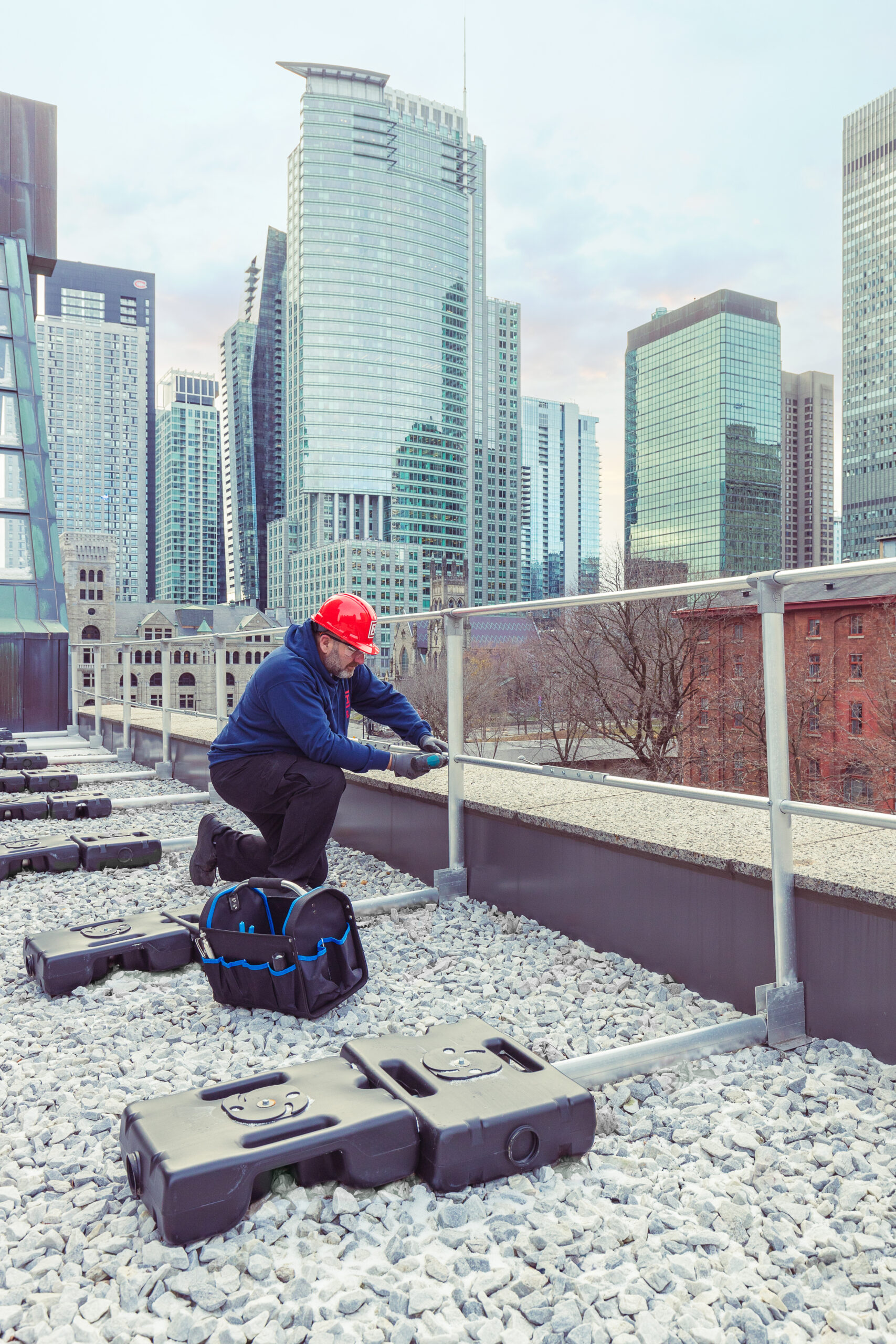
In the field of work at height, ensuring employee safety goes far beyond regulatory compliance: it is a true moral responsibility and a cornerstone of corporate social responsibility (CSR). Regular inspections and maintenance of access and safety equipment play a crucial role—not only to ensure proper functioning but also to demonstrate a company’s commitment to protecting people and supporting community well-being.
Here’s why these practices go well beyond simple technical requirements.
Worker safety: a top priority
Access and safety equipment for work at height, such as lifelines, anchor points, and guardrails, play a vital role in protecting employees. However, without regular inspections and proper maintenance, these systems can deteriorate or develop hidden defects, putting workers at risk. Adopting a proactive maintenance strategy helps prevent these hazards and ensures that every system functions as intended. By providing safe working conditions, companies demonstrate that employee well-being is a top priority, which not only reduces accidents, but also boosts team trust and productivity.
An impact on the community
Corporate responsibility extends beyond employees. Poorly maintained infrastructure can also pose a risk to surrounding communities. For example, faulty equipment can lead to falling debris or incidents affecting passersby or nearby buildings. By ensuring rigorous maintenance, companies protect not only their workers, but also the communities they interact with. This reinforces their role as responsible corporate citizens and helps create a safer environment for everyone.
Strengthen brand image and trust
Clients, partners, and investors place great importance on how a company manages its social responsibilities. Exemplary safety and maintenance practices demonstrate a commitment to core values such as integrity and sustainability. This focus on safety and compliance strengthens the company’s brand image, enhances its credibility in the market, and attracts talent that shares its values. Employees are also more likely to remain with an organization that prioritizes their safety.
A strategic and ethical move
Protecting workers, safeguarding communities, and inspiring trust: these are the pillars of a successful inspection and maintenance strategy. Are you ready to strengthen your commitment to these values?
