Article
The impact of access and security equipment maintenance on building values.
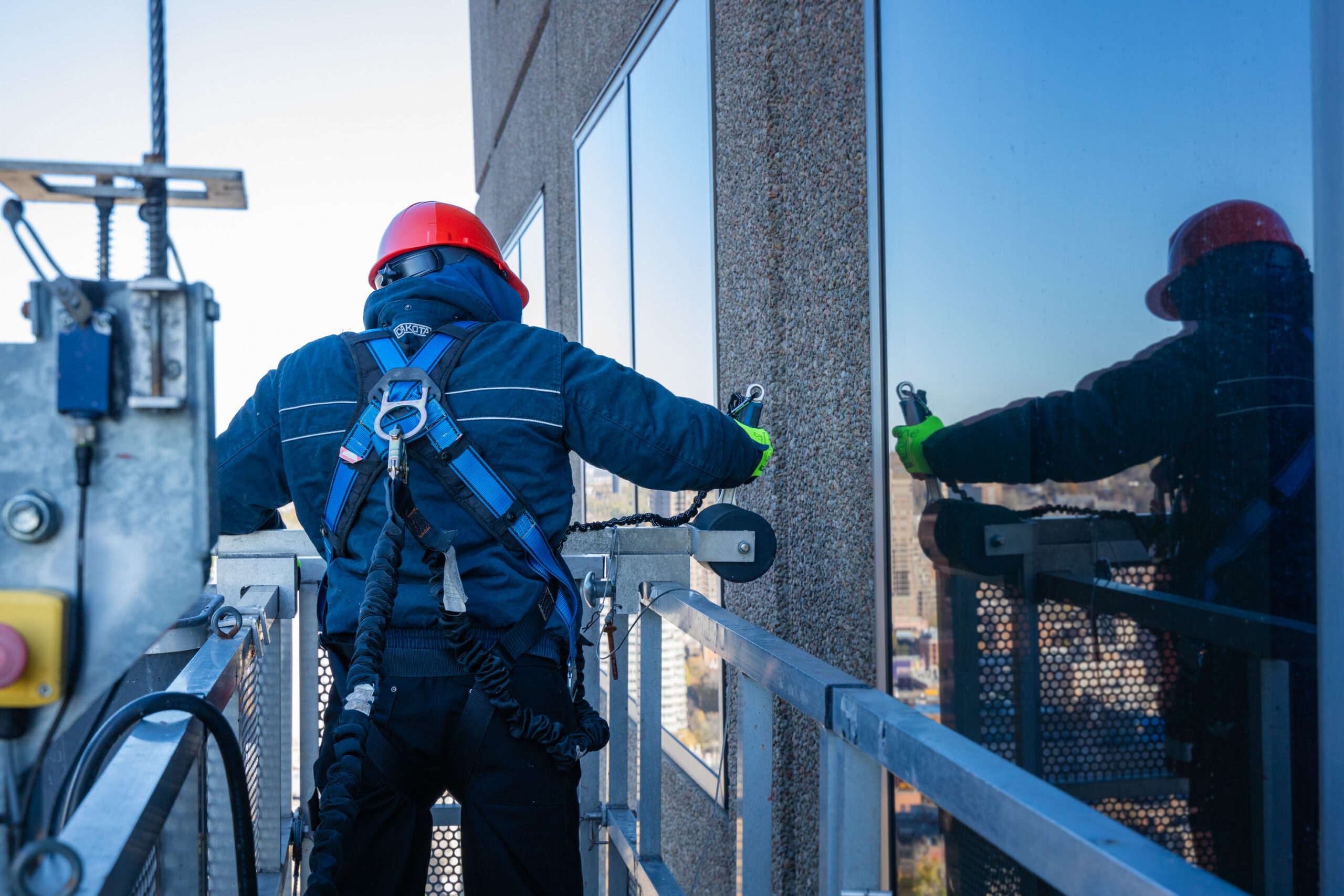
The maintenance of access and safety equipment for work at height is often perceived as an obligation related to safety standards. However, beyond this regulatory aspect, it plays a key role in preserving and even increasing the value of buildings. Proper maintenance of access systems, anchor points, guardrails and other protective equipment not only contributes to worker safety but also strengthens the durability, reputation and profitability of any building.
1. Preservation of structural integrity
Access and security equipment are often fixed directly to building structures, such as roofs, facades or floors. If such equipment is not regularly inspected and maintained, it may become damaged over time and affect the integrity of the parts to which it is attached. For example, a poorly fixed or worn anchor can cause water infiltration or cracks, which in the long term weaken the structure.
Regular maintenance of these devices prevents this damage and extends the life of the infrastructure, which contributes to maintaining or even increasing the value of the building. A building whose structures are protected by well-maintained systems inspires confidence among investors, tenants and potential buyers.
2. Improving safety and compliance
A building equipped with well-maintained safety equipment is a building in compliance with the current safety standards. This compliance is not only essential to avoid fines and penalties, but also constitutes a guarantee of reliability for occupants and visitors.
Building owners who ensure rigorous maintenance of access equipment enhance the safety of workers who regularly intervene on roofs or facades for the maintenance of mechanical, ventilation or cleaning systems. Equipment such as permanent anchors or lifelines guarantee continuous safety, which avoids costly accidents both in human and financial terms. A safe building attracts more companies wanting to set up in spaces where safety standards are taken seriously.
3. Increase in equipment durability and long-term savings
Regular maintenance of access equipment extends its life and avoids the significant costs associated with premature replacement. Well-maintained equipment is less prone to failure, which reduces business interruptions and repair costs.
These long-term savings translate into more efficient building management and improved profitability for owners. Moreover, investors or potential buyers will see in this regular maintenance a sign of rigor and reliability, thus increasing the attractiveness of the building.
4. Enhancement of brand image and reputation
A building that meets and even exceeds safety standards conveys a positive image. This is particularly important for high commercial or residential buildings
range, where safety and general maintenance are key elements to attract tenants and leading companies.
Proactive safety management through regular maintenance of access equipment strengthens the reputation of the building and its managers. A building that is known for its safety and quality maintenance will more easily attract new clients or tenants, which will improve its long-term profitability.
The maintenance of access and security equipment has a direct and lasting impact on the value of buildings. By preserving the integrity of infrastructures, ensuring the safety of occupants and increasing the durability of equipment, it contributes to efficient management and a solid reputation. A well-maintained building inspires confidence, attracts quality tenants, and remains competitive in the real estate market.
